Official Saudi government website links end with edu.sa
All official educational website links in the Kingdom of Saudi Arabia end with .sch.sa or .edu.sa

An official government website affiliated with the Government of the Kingdom of Saudi Arabia





 About King Khalid University
About the University kku
 , similar to other Saudi universities
Vision

Mission

 Objectives of KKU Strategy 2030


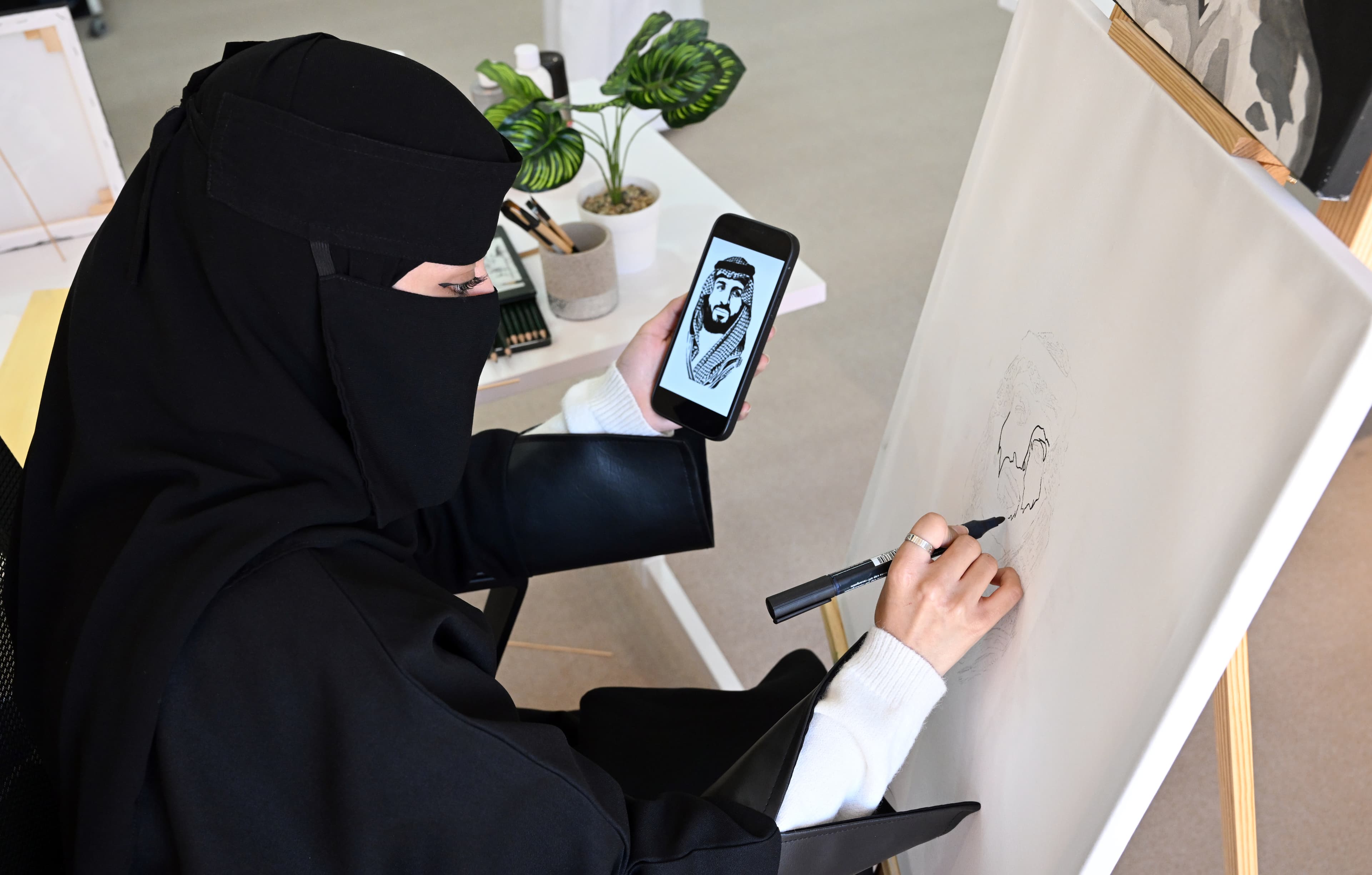




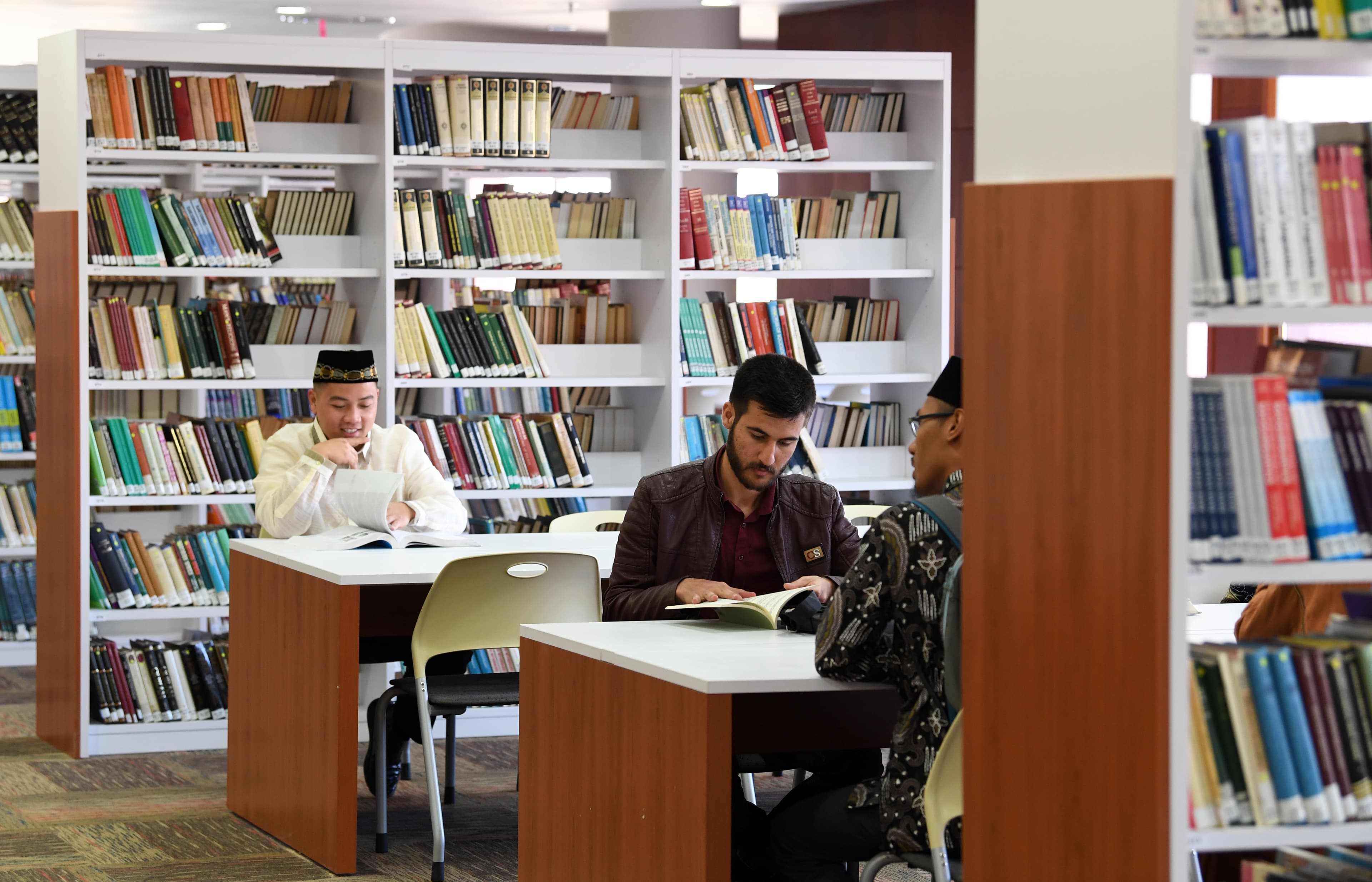



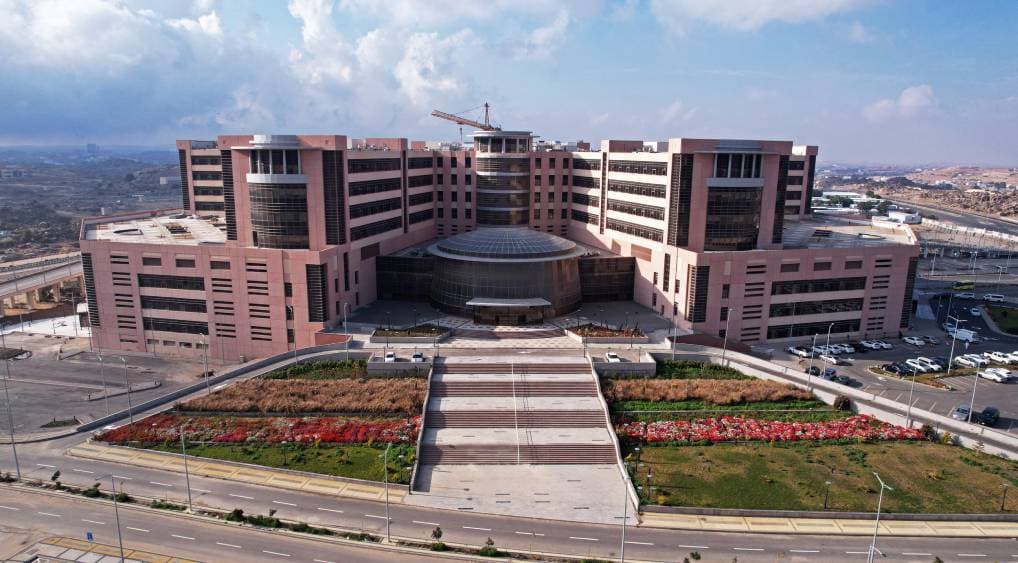

 Persons of influential contributions to King Khalid University
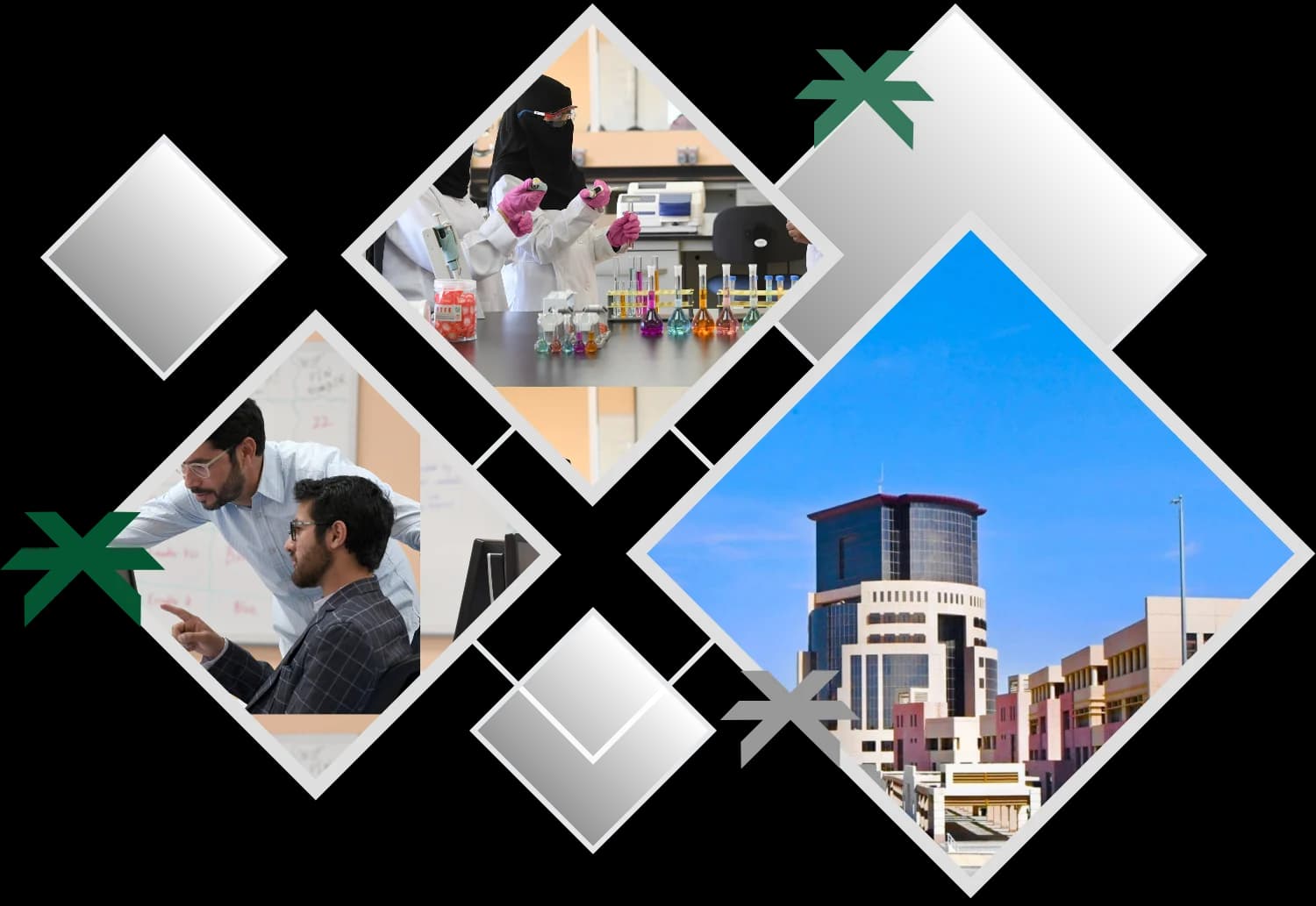 The University Towards Vision 2030
The Organizational Structure illustrates the University's administrative and organizational hierarchy, as well as the relationships among its organizational units. It reflects the distribution of responsibilities and authorities, contributes to strengthening governance, clarifying roles, and enhancing institutional efficiency, in accordance with the regulations and policies adopted by King Khalid University.
In 1419H, the Vice Presidency of the University was part of the approved organizational structure of King Khalid University. Since then, it has been entrusted with many tasks, responsibilities, and authorities that align with the fundamental requirements of pioneering university work. The Vice Presidency has achieved many accomplishments from that time until now, and those concerned within it have exerted fruitful and constructive efforts, foremost among them the former university vice presidents. It aims to provide a safe educational and administrative environment for all university members in accordance with best practices, and to achieve a work environment that attracts creativity, stimulates excellence, is competitive in performance, and continuously evolving.
In 1419H, the Vice Presidency for Graduate Studies and Scientific Research was established as part of the approved structure of King Khalid University. Since then, it has been assigned many tasks, responsibilities, and authorities consistent with the requirements of pioneering university work. It has achieved numerous accomplishments since its establishment, and those working within it have exerted fruitful and constructive efforts, led by former vice presidents: Prof. Mohammed bin Yahya Al-Shahri, Prof. Mohammed bin Ali Al-Hayaza, Prof. Saeed bin Abdullah Sabr, Prof. Ahmed bin Taher bin Mubarak, Prof. Majed bin Abdulkarim Al-Harbi, and Prof. Saad Abdulrahman Mohammed Al-Omari. Currently, Prof. Hamed Majdou’ Al-Qarni serves as Vice President for Graduate Studies and Scientific Research. Among its objectives is supervising the strategic plan for developing graduate studies and scientific research at the university and monitoring its implementation.
It also aims to diversify graduate programs and research outputs in line with knowledge development trends and link them to the needs of the Kingdom to support sustainable development.
The Vice Presidency for Business and Knowledge Economy was established on 20/03/1440H based on a directive from the Minister of Education. Its name was later changed to the Vice Presidency for Business and Community Partnership. Its objectives include utilizing the university’s capabilities, resources, and expertise to enhance community partnership and volunteer work, as well as developing and diversifying revenue sources and strengthening investments.
It is the entity responsible for providing a leading academic and educational environment at the level of similar bodies in Saudi and Arab universities. Its tasks include supervising and monitoring admission standards for students, overseeing the development of colleges and departments in their general structure, supervising and supporting the development of study plans and academic programs, preparing guides and models for distinguished performance, monitoring updates in academic programs locally and internationally, coordinating with relevant entities to organize workshops and training courses, supervising student affairs and activities, and overseeing the professional development of faculty members and training programs.
| Order | Position |
|---|---|
| 1 | University President |
| 1.1 | University Council |
| 1.2 | Board of Trustees |
| 1.2.1 | University Endowment Council |
| 1.2.2 | University Endowment Secretariat |
| 1.3 | Medical City |
| 1.4 | Strategy and Initiatives Department |
| 1.5 | Intellectual Awareness Unit |
| 1.6 | University Council Secretariat |
| 1.7 | Advisors |
| 1.8 | Data Office |
| 1.9 | President's Office |
| 1.10 | Confidential Office |
| 1.11 | General Administration of Legal Affairs |
| 1.12 | General Administration of Cybersecurity |
| 1.13 | General Administration of Internal Audit |
| 1.14 | General Administration of Institutional Communication |
| 1.15 | General Administration of Planning and Budget |
| 1.16 | International Advisory Council |
| 1.17 | Advisory Council for Faculty Members and Their Equivalents |
| 1.18 | University Official Spokesperson |
| 1.19 | University Financial Controller |
| 1.20 | Financial Controller for Self-Generated Resources and the Student Fund |
| 1.21 | Beneficiary Care Center |
| 1.22 | University Vice Presidency for Administrative Affairs |
| 1.22.1 | General Administration of Human Resources |
| 1.22.2 | General Administration of Administrative and Financial Affairs |
| 1.22.3 | General Administration of Facilities |
| 1.22.4 | General Administration of University Security |
| 1.22.5 | General Administration of Administrative Communications |
| 1.22.6 | General Administration of Projects |
| 1.22.7 | Risk Management and Business Continuity Department |
| 1.22.8 | University Property Management |
| 1.22.9 | Administrative and Financial Efficiency Department |
| 1.22.10 | Inventory Control Department |
| 1.22.11 | Documents and Archives Center |
| 1.23 | University Vice Presidency for Graduate Studies and Scientific Research |
| 1.23.1 | Deanship of Research and Graduate Studies |
| 1.23.2 | Scientific Council Secretariat |
| 1.23.3 | Scholarship Department |
| 1.23.4 | Scientific Publishing Department |
| 1.23.5 | Local and International Cooperation Department |
| 1.23.6 | International Rankings Unit |
| 1.23.7 | Central Laboratories |
| 1.23.8 | University Research Centers |
| 1.23.8.1 | Prince Sultan bin Abdulaziz Center for Environmental Research and Natural Resources Sustainability |
| 1.23.8.2 | Research Center for Advanced Materials Science |
| 1.23.8.3 | Health and Medical Research Center |
| 1.23.8.4 | Center for Engineering and Technology Innovations |
| 1.23.8.5 | Artificial Intelligence Center |
| 1.23.8.6 | Asir Region History Center |
| 1.23.8.7 | Center of Tourism Research and Asir Region Economics |
| 1.23.8.8 | Center of Bee Research and Its Products |
| 1.23.8.9 | Center for Humanities and Philosophical Studies |
| 1.24 | University Vice Presidency for Business and Community Partnership |
| 1.24.1 | Institute of Studies and Consulting Services |
| 1.24.2 | General Administration of Alternative Revenues |
| 1.24.3 | General Administration of Investment |
| 1.24.4 | General Administration of Volunteering and Community Partnerships |
| 1.24.5 | Entrepreneurship Center |
| 1.24.6 | Design Thinking Center |
| 1.25 | University Vice Presidency for Educational Affairs |
| 1.25.1 | University Colleges |
| 1.25.1.1 | College of Sharia and Fundamentals of Religion |
| 1.25.1.2 | College of Education |
| 1.25.1.3 | College of Science |
| 1.25.1.4 | College of Arts and Humanities |
| 1.25.1.5 | College of Languages and Translation |
| 1.25.1.6 | College of Computer Science |
| 1.25.1.7 | College of Engineering |
| 1.25.1.8 | College of Architecture and Planning |
| 1.25.1.9 | College of Business |
| 1.25.1.10 | College of Law |
| 1.25.1.11 | College of Tourism and Hospitality |
| 1.25.1.12 | Applied College in Khamis Mushait |
| 1.25.1.13 | Applied College in Mahayil Asir |
| 1.25.1.14 | Applied College in Dhahran Al Janoub |
| 1.25.1.15 | Applied College in Sarat Ubaidah |
| 1.25.1.16 | College of Medicine |
| 1.25.1.17 | College of Dentistry |
| 1.25.1.18 | College of Pharmacy |
| 1.25.1.19 | College of Applied Medical Sciences in Abha |
| 1.25.1.20 | College of Nursing in Abha |
| 1.25.1.21 | College of Applied Medical Sciences in Khamis Mushait |
| 1.25.1.22 | College of Nursing in Khamis Mushait |
| 1.25.1.23 | College of Nursing in Mahayil Asir |
| 1.25.1.24 | College of Applied Medical Sciences in Mahayil Asir |
| 1.25.1.25 | College of Culture and Arts in Rijal Almaa |
| 1.25.1.26 | Applied College |
| 1.25.1.27 | Applied College in Tanomah |
| 1.25.1.28 | Applied College in Rijal Almaa |
| 1.25.1.29 | Applied College in Al Majardah |
| 1.25.2 | Deanship of Admission and Registration |
| 1.25.3 | Deanship of Student Affairs |
| 1.25.4 | Deanship of Development and Quality |
| 1.25.5 | Deanship of E-Services |
| 1.25.6 | General Administration of International Students |
| 1.25.7 | General Administration of Educational Services |
| 1.25.8 | Student Advisory Council |
| 1.25.9 | English Language Center |
Code of Ethics
King Khalid University (KKU) is committed, in all its policies, decisions and dealings with ethical framework. It is also governed by a set of values derived from the teachings of our Islamic religion which have been approached by this country's leaders. Moreover, these values are consistent with the Ministry of Higher Education’s policies and are in harmony with the pursuit of King Khalid University into a unique excellent university. So, the university’s concerns are not confined only to the educational, research and community service activities, but it ensures that it is an academic institution which offers these three functions under a framework of ethical values. There is no doubt that the multifunctionality of the university and the increasing and complexity of the undertaken tasks, as well as the increase in internal and external relationships, have imposed the need for an ethical framework that instructs and directs the behavior of its employees, especially at varying points of view about a particular behavior pattern. Here ethical framework comes to set a number of specific ethical trends, standards, responsibilities, controls and caveats, that are agreed upon and which govern the practices within the university community. However, the ethical framework is so different from the terms, rules or regulations, in that it is a declared agreement among a group of sides on framework of ethical values and specific set of behavior rules in various situations. For that, it represents a compelling ethical value for all.

This framework reflects King Khalid University’s policy of adherence to the principles of Islam through a set of values that govern its conduct and the conduct of its members. It also aligns with the policy of the Ministry of Higher Education and the Kingdom in emphasizing integrity across all state institutions, and corresponds with the expectations and vision of individuals and institutions within society toward the University. Accordingly, all University members are committed to adhering to this sound framework, as each bears multiple responsibilities toward the University, including students, administrative staff, faculty members, and leadership, in addition to its physical components such as buildings, various resources, and the broader external community. This framework is not intended to introduce new values that are not already practiced within the University community, nor to compensate for deficiencies among its members; rather, it serves to affirm and clarify agreed-upon patterns of behavior and practices for all University members, particularly in cases of differing viewpoints. It also functions as a guide for new members and as a declaration to society’s institutions and individuals of the value system and behavioral approach governing King Khalid University. The framework includes a set of agreed-upon commitments and responsibilities among all University members, encouraging adherence, the reinforcement of positive values and practices, and the avoidance of prohibited conduct. It is centered on commitment to a clear and defined value system that ensures respect for individuals, protection of rights, accountability, provision of an outstanding academic and administrative work environment, development of individual and institutional capacities, promotion of academic values, equal opportunity, and excellence in performance. Given the diversity and evolution of the University’s relationships with community institutions over time, the practices of its members must align with this diversity to ensure meaningful positive engagement, which necessitates periodic development of the ethical framework in response to emerging behavioral patterns. This framework differs from a code of practice; however, it includes certain responsibilities of an ethical nature that intersect with professional practices. This does not represent overlap or misunderstanding, as the fundamental principle is the ethical execution of professional practices.
This ethical framework derives its importance from being:
All individuals associated with King Khalid University through a working relationship, including:
Faculty members perform multiple roles and responsibilities within the University to achieve the desired development. Therefore, a set of responsibilities and obligations is associated with each of these roles, which faculty members must adhere to. The most important of these are as follows:
Maintaining exemplary conduct and speech and serving as a positive role model.
Respecting and adhering to University regulations, policies, and ethical framework responsibilities.
Delivering outstanding performance in all assigned duties.
Pursuing academic, professional, administrative, and personal development.
Maintaining an appropriate personal appearance.
Refraining completely from receiving any gifts or benefits, whether material or non-material, from individuals with whom they have a relationship, including students and supervised graduate students.
Awareness of the University’s vision, mission, goals, and values, and contributing to their achievement.
Maintaining the safety and security of the University, its members, and facilities during professional activities.
Studying and contributing to the development of the department’s vision, mission, objectives, and values.
Actively participating in designing and developing academic programs and courses.
Collaborating effectively with colleagues to achieve program objectives.
Participating in official councils and activities related to academic, research, and administrative development.
Engaging in social and cultural activities within the department.
Participating in scientific and professional programs.
Preparing courses effectively and selecting appropriate teaching strategies.
Announcing course objectives in the first session and linking them to program outcomes.
Providing required learning resources such as books, references, and websites.
Adhering to lecture schedules and utilizing time efficiently.
Announcing and maintaining office hours to support students.
Maximizing the use of available learning resources.
Linking theoretical and practical aspects of teaching.
Adapting teaching methods based on feedback and evaluation.
Monitoring achievement of course objectives.
Considering individual differences among students.
Treating students with respect and professionalism.
Providing academic and behavioral guidance to students.
Collecting student feedback during and after the course.
Avoiding any financial exploitation of students, including forcing them to purchase materials or private lessons.
Announcing assessment regulations and timelines at the beginning of the semester.
Clarifying assessment strategies used throughout the semester.
Using diverse assessment methods and tools.
Ensuring alignment between course objectives and assessment processes, including:
- Considering the relative weight of each objective and its corresponding questions.
- Balancing time allocated for each topic and its related questions.
- Matching exam duration with the time required to answer questions.
- Ensuring diversity in cognitive, skill-based, and affective objectives.
Providing an appropriate environment during assessments.
Utilizing technology in assessment whenever possible.
Using assessment results to improve curricula.
Maintaining confidentiality of exams and results.
Considering individual differences among students.
Not using grades as a form of punishment.
Ensuring scientific and quality standards in exam preparation.
Writing exam questions in clear and correct language.
Clearly indicating grade distribution on exam papers.
Being present during exams for emergencies.
Grading student responses personally using model answers.
Using both essay and objective question types.
Preparing a marking scheme before grading.
Evaluating responses with fairness and accuracy.
Providing feedback to students.
Allowing review of answers in case of complaints.
Announcing results using student identification numbers.
Adhering to academic integrity, honesty, and intellectual property rights.
Respecting rights in collaborative research.
Aligning research with departmental, college, and University plans.
Focusing on applied research addressing societal needs.
Avoiding unnecessary use of research resources.
Ensuring proper use of equipment.
When collecting data, the following must be observed:
- Clearly explaining the purpose and usage of collected data.
- Ensuring confidentiality of data.
- Proper disposal of documents after use.
Following ethical standards in experiments involving animals or human subjects.
Presenting results objectively without bias.
Maintaining neutrality when reviewing research work.
Indicating University affiliation in publications.
During supervision, the following must be observed:
- Acting as a professional role model.
- Maintaining respectful relationships with students.
- Avoiding assigning tasks outside research scope.
- Properly citing student work.
Avoiding research partnerships that create conflicts of interest.
Collaborating effectively when sharing resources.
Maintaining the confidentiality and privacy of University data and information, and avoiding confusion between freedom of expression and any negative impact on the University’s vision, mission, and ability to achieve its goals.
Acting as a positive role model in conduct, speech, and behavior, and representing the University in a distinguished manner.
Adhering to public ethics, regulations, and institutional policies.
Actively participating in community service activities at both individual and institutional levels.
Linking academic course content and examples provided to students with societal issues whenever possible.
Connecting research activities with societal issues and challenges whenever possible.
Guiding students toward positive ethics and desired social behaviors through words and actions.
Promoting values and ethical principles among students as future contributors to society.
Ensuring attention to public health and environmental well-being in all professional and research practices.
Representing the University positively in all interactions with colleagues inside and outside the University.
Maintaining positive and respectful relationships with colleagues.
Participating in social and academic activities organized by the department, college, or University.
Fully cooperating in shared academic tasks such as joint teaching responsibilities.
Contributing to program descriptions, reports, joint exam grading, and collaborative research activities.
Participating in broader initiatives for developing education, research, and community service.
Making available University resources in their possession to colleagues when needed, including equipment, materials, and educational tools.
Respecting colleagues’ privacy and refraining from interfering in personal matters or disclosing any information about them.
Adhering to proper conduct, ethical values, and public manners.
Representing the University positively both internally and externally.
Maintaining appropriate appearance and respecting social and cultural norms.
Complying with University rules, regulations, and policies.
Understanding program objectives and striving to achieve them.
Attending lectures and academic sessions on time.
Maintaining an appropriate academic and research environment.
Respecting faculty members and treating them appropriately.
Participating in student activities to enhance development and belonging.
Maximizing use of University facilities and resources.
Preserving University property.
Claiming rights through official and legitimate channels.
Maintaining ethical conduct and professional behavior.
Complying with institutional rules and regulations.
Understanding job responsibilities and ensuring competence.
Engaging in continuous professional development.
Maintaining and protecting University facilities.
Ensuring confidentiality of information.
Exerting maximum effort to achieve institutional goals.
Cooperating effectively with all University members.
Treating all beneficiaries respectfully.
Managing working time efficiently.
Demonstrating dedication and commitment.
University resources include all facilities, communication systems, networks, office equipment, printing devices, vehicles, chemicals, laboratory samples, and all services funded by the University such as electricity, water, and telecommunications.
Using resources strictly for work purposes except in emergencies.
Using resources efficiently without waste.
Handling equipment properly to extend usability and reduce maintenance costs.
Ensuring fair access to shared resources.
Maintaining safety in handling all resources.
Establishing a permanent committee to monitor implementation and propose improvements.
Reviewing proposals and violations submitted by University units.
Submitting violations to authorized officials for action.
The ethical framework represents a shared commitment among University members. Violations hinder progress and negatively affect the institution’s reputation, requiring appropriate regulatory actions.
The framework aims to improve conduct and includes graduated measures based on severity and recurrence of violations.
Issuing warnings from verbal to written.
Applying institutional regulations.
Compensating for damages.
Restricting participation in relevant activities.
Removing leadership responsibilities.
Suspending privileges temporarily.
Restricting participation in activities for students.
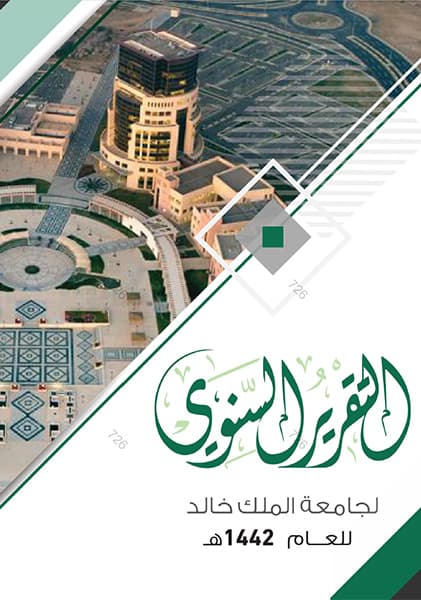
King Khalid University Annual Report for the year 1442

King Khalid University Annual Report for the year 1443
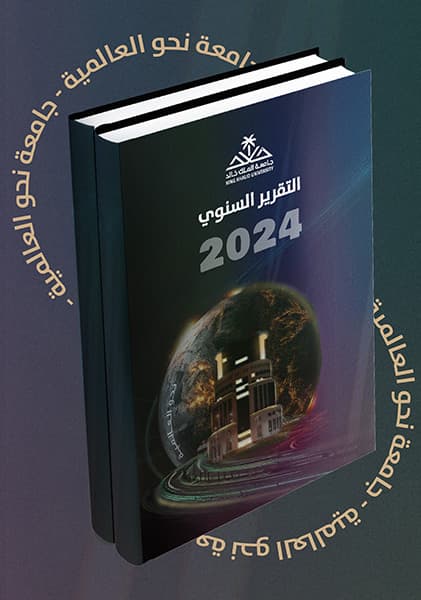
King Khalid University Annual Report for the year 2024


