Official Saudi government website links end with edu.sa
All official educational website links in the Kingdom of Saudi Arabia end with .sch.sa or .edu.sa

An official government website affiliated with the Government of the Kingdom of Saudi Arabia


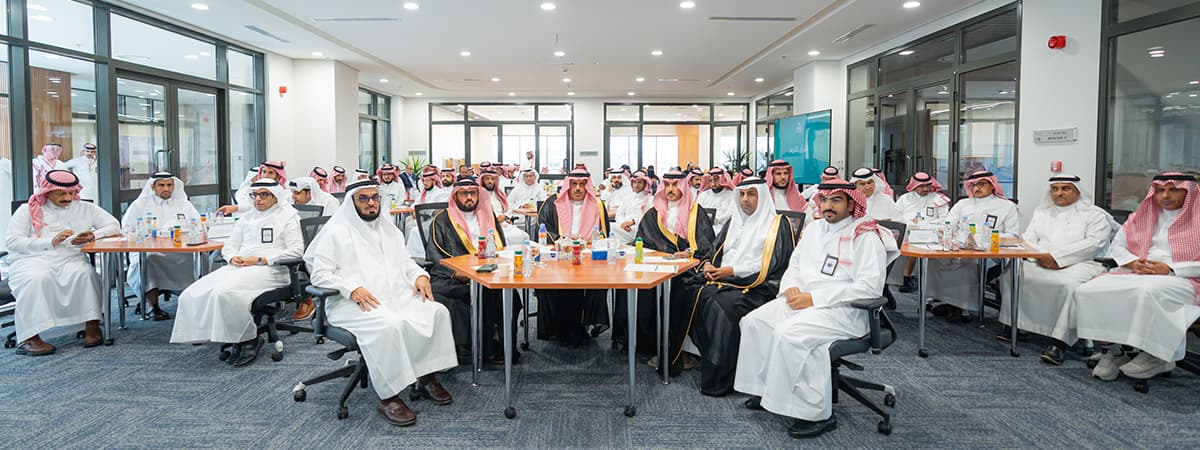


His Excellency the President of King Khalid University, Prof. Faleh bin Raja Allah Al-Solamy, attended a celebration organized by the University, represented by the Deanship of Development and Quality, to mark the achievement of academic accreditation for 100% of its bachelor's and doctoral programs eligible for program accreditation. The event was held at the University Oasis in the presence of University Vice Presidents, deans of colleges and supporting deanships, and several academic and administrative leaders.
This achievement reflects the culmination of the University's efforts to develop its academic programs and enhance the quality of education and learning outcomes in accordance with national academic accreditation standards. These efforts include updating curricula and improving teaching practices, supporting the University's strategic objectives, strengthening the efficiency of its academic system, and enhancing its competitiveness nationally and internationally.
In his address during the celebration, His Excellency the University President emphasized the importance of preserving academic achievements and continuing to develop programs and curricula in alignment with the University's identity, strategic directions, and labor market needs. He stressed the need for coordinated efforts across all University sectors, sustained quality and excellence, and continuous improvements in the student experience and learning outcomes.
During the celebration, the Dean of Development and Quality, Dr. Mohammed bin Hadi Al-Ghamdi, reviewed the University's key achievements in quality assurance and academic accreditation over recent years, program accreditation indicators across different levels of study, and efforts to develop academic curricula and programs. He also highlighted initiatives to strengthen quality practices and continuous improvement across colleges and relevant University entities.
The event included a presentation of the new organizational structure of the Deanship of Development and Quality and its responsibilities in quality assurance and academic accreditation, curriculum and program development, institutional excellence and capacity building, measurement and evaluation, and continuing education. The new structure aims to strengthen the integration of responsibilities, improve operational efficiency, and support academic and administrative entities in achieving their objectives.
The Deanship also presented several future academic projects, including enhancing the governance of new academic program development and updating curricula to align with labor market needs, strengthening student training programs, supporting national and international academic accreditations, and improving the readiness of programs targeted for accreditation. These initiatives aim to enhance the educational experience and improve learning outcomes.
In the area of institutional development, the presentation covered projects to advance the institutional excellence framework and the University's Excellence Award, activate the role of the Continuing Education Office, and expand capacity-building and professional development programs. It also addressed the development of management system certification services in accordance with international standards and the enhancement of performance and impact measurement tools to support continuous improvement.
The presentation highlighted the Deanship's priorities for the next phase, focusing on establishing a culture of sustainable quality and moving beyond meeting academic accreditation requirements toward measuring their impact on performance and outcomes. This will be achieved through collaboration across University sectors, the development of academic and administrative practices, and the adoption of initiatives that enhance institutional efficiency.
At the conclusion of the celebration, His Excellency the University President honored the University Vice Presidents, college deans, academic and administrative teams, and partners who contributed to the academic accreditation achievement, in recognition of their efforts to develop academic programs, strengthen quality practices, and support integrated institutional collaboration that made this University-wide achievement possible.


