Official Saudi government website links end with edu.sa
All official educational website links in the Kingdom of Saudi Arabia end with .sch.sa or .edu.sa

An official government website affiliated with the Government of the Kingdom of Saudi Arabia



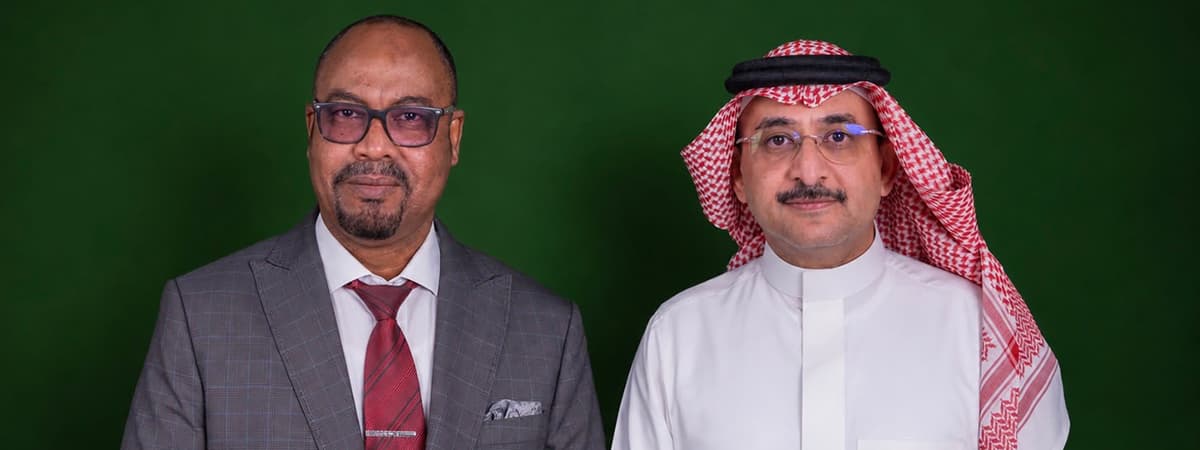


Faculty members at the College of Dentistry at King Khalid University, Dr. Manea Mousa Mosleh Al-Ahmari and Dr. Mohammed Fadl Abdulqader Al-Aqib, have obtained a patent from the Saudi Authority for Intellectual Property for their innovation, “A Bone Patch for Reconstructing Areas of Bone Loss in the Jaw,” which aims to support the reconstruction of areas affected by bone loss in the jaw.
Al-Ahmari and Al-Aqib explained that the innovation involves the development of an innovative bone patch for reconstructing areas of bone loss in the jaw. Designed in the shape of the Greek letter omega (Ω), the patch features serrated projections to enhance fixation and healing, along with a protective membrane and a gradually biodegradable capsule, providing the protection and space necessary for bone regeneration.
They noted that one of the innovation’s key features is the ability to customize the patch design for each patient according to the extent, size, and shape of bone loss. It also provides horizontal and vertical spaces tailored to the needs of each case, while enhancing patch fixation through the serrated projections and protecting the bone regeneration area with the capsule and protective membrane.
The innovation also relies on biocompatible materials and allows for the use of various types of materials. Its ease of implementation and surgical application, along with its low cost, makes it suitable for use in dental clinics.
The researchers indicated that the innovation is intended to address some of the challenges associated with current bone regeneration techniques, including techniques that rely on screws or titanium meshes. The proposed design provides protection for the bone regeneration area and customized horizontal and vertical spaces according to the needs of each case, making it suitable for patients with severe jawbone atrophy or resorption.
The innovation aims to protect and cover the bone regeneration area, enhance patch fixation, and support bone healing, thereby helping prepare the jawbone for permanent dental implants. The patch can also be customized according to the surgical case and the patient’s needs, with the possibility of using more than one type of material depending on the requirements of each case.
The researchers explained that future applications of the innovation include customizing patch dimensions using 3D printing technologies based on the patient’s computed tomography (CT) scans, allowing the patch to be designed according to the nature of bone loss in each case.
The researchers also look forward to developing bone-regeneration-stimulating materials that can be incorporated into the capsule, including advanced growth factors or stem cells, thereby enhancing the innovation’s potential in the field of bone reconstruction.
Future applications also include expanding the use of the innovation to reconstruct facial and jaw bones affected by accidents or tumors, as well as further developing its applications in reconstructive surgery and dental implant procedures.
This achievement comes as part of King Khalid University’s efforts to support scientific research and innovation, enhancing the impact of scientific research and contributing to community service.


