Official Saudi government website links end with edu.sa
All official educational website links in the Kingdom of Saudi Arabia end with .sch.sa or .edu.sa

An official government website affiliated with the Government of the Kingdom of Saudi Arabia



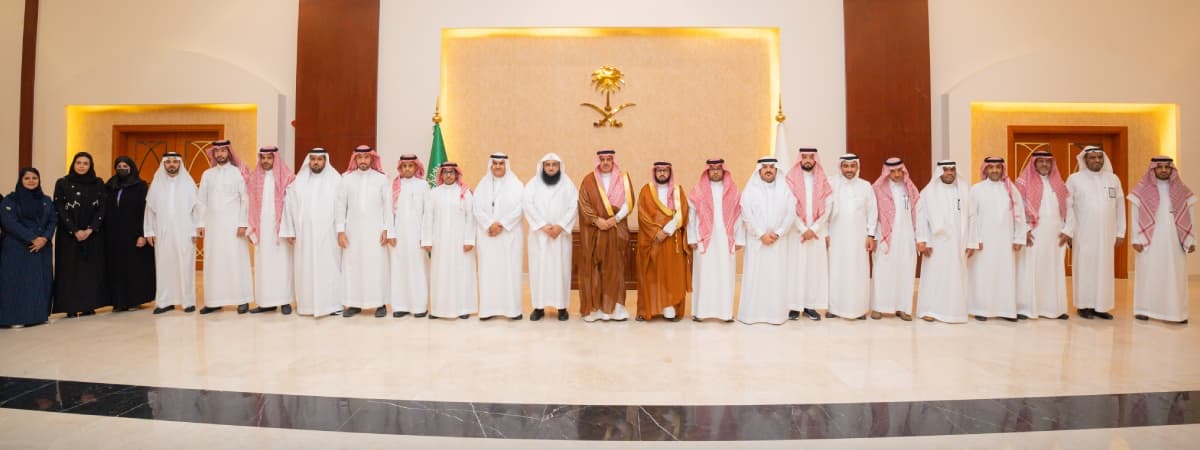


His Excellency the President of King Khalid University, Professor Dr. Faleh bin Rajaa Allah Al-Sulami, received yesterday, Wednesday, the participants in the Sixth Consultative Meeting of Chief Executive Officers of Applied Colleges, which was held under the theme “Applied Colleges: Sustainability and Institutional Identity,” at the university campus in Al-Faraa. The meeting was attended by the Vice President for Educational Affairs, Professor Dr. Saad bin Mohammed bin Dajam, and a number of academic and executive leaders from Saudi universities, with the aim of strengthening integration among applied colleges and developing their roles within the university education system.
The Chief Executive Officer of the Applied College at the university, Dr. Ahmed bin Ali Al Murai, explained that the meeting comes amid the rapid transformations witnessed in the higher education sector and the pivotal role of applied colleges in supporting qualitative expansion in applied education, aligning it with labor market needs, offering flexible programs, and strengthening effective partnerships, in line with the objectives of national development and Saudi Vision 2030.
Al Murai pointed out that the choice of the meeting’s title in its sixth edition, “Sustainability and Institutional Identity,” stems from the importance of applied colleges as one of the most significant enablers of expansion in applied education and a key pillar emphasized by the regulations governing applied colleges and related national initiatives, foremost among them operational flexibility, integration of efforts, program review, and building institutional business models that take into account specificity, identity, and diverse needs within a unified national framework.
He emphasized the importance of strengthening professional dialogue among executive leaders of applied colleges regarding the position of these colleges within the university system, their organizational roles, governance models, and prospects for developing their programs, in a way that contributes to practical recommendations that enhance their efficiency and the quality of their educational and training outcomes.
The meeting activities included several specialized sessions and themes discussing the most prominent priority issues in the applied education sector. The first session was titled “Institutional Identity of Applied Colleges: Structure, Administrative Leadership, and Relationship with the University,” and addressed five main themes, including institutional identity between governing regulations and practical implementation, the institutional and operational relationship between the applied college and the university, organizational structures and administrative leadership, mechanisms for selecting leaders and evaluating performance, in addition to the impact of institutional identity on programs, partnerships, and public image.
The second session, titled “Sustainability of Applied Colleges: Programs, Operations, and Enablers,” discussed the regulatory requirements for completing the empowerment of applied colleges, the sustainability of programs in terms of governance, accreditation, needs, development, and review, in addition to partnerships and their relationship to the labor market, operational and financial sustainability, performance indicators and impact measurement, and the future role of applied colleges within the university environment.
The meeting concluded with a number of recommendations aimed at enhancing the efficiency of applied colleges, developing their operational models, and improving the quality of their educational and training outcomes, thereby supporting their role as a strategic component within the university education system and national development.


