Official Saudi government website links end with edu.sa
All official educational website links in the Kingdom of Saudi Arabia end with .sch.sa or .edu.sa

An official government website affiliated with the Government of the Kingdom of Saudi Arabia



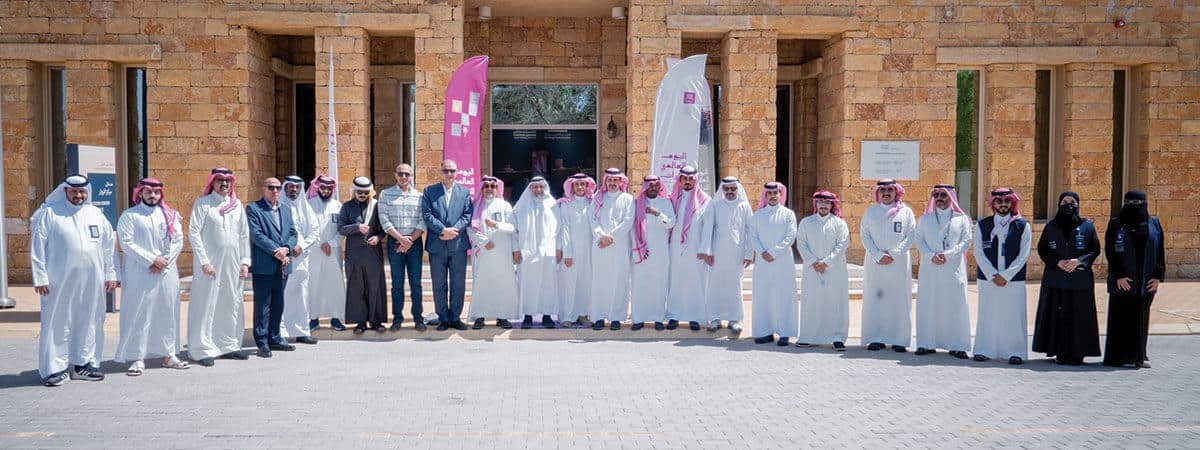


The College of Arts and Humanities at King Khalid University concluded its programs organized in celebration of World Heritage Day, within the framework of its efforts to enhance cultural awareness and highlight national heritage, in alignment with the objectives of the university’s 2030 strategy.
The college launched its activities through the Department of History and Archaeology, which organized an event in partnership with the Heritage Commission branch in the Asir Region, held at the Visitor Center in the historic city of Jurash, with the participation of a group of specialists and individuals interested in cultural heritage, in the presence of the Head of the Department, Dr. Ghurman bin Abdullah Al-Shahri.
The event included a variety of programs, most notably a symposium titled “Saudi Cultural Heritage between Preservation and Development – A Vision for the Future,” featuring Eng. Abdulaziz bin Awadh Al-Ghanem, Director General of the Heritage Commission in the Asir Region, and Prof. Mustafa Mohammed Qandil Zayed, Professor of Archaeology at King Khalid University. The session was moderated by Dr. Ali bin Saleh Al-Omari, Associate Professor of Islamic History at the university. The symposium discussed ways to preserve and develop heritage, as well as reviewing national experiences in utilizing heritage as a driver for sustainable development.
In the same context, and as part of the events coinciding with World Heritage Day, the Department of Geography at the college, in cooperation with the Continuing Education Office at the university, delivered a scientific lecture titled “The Mountain as the Memory of Civilizations: A Reading of the Mountain Heritage of the Asir Region.” The lecture was presented by Dr. Abdulhamid Ghazi and Dr. Jameela Al-Mahya, addressing the geographical and cultural dimensions of mountain heritage, its importance in shaping local identity, and highlighting the characteristics of the mountainous environment in the Asir Region and its relationship to human history.
These programs targeted a wide range of interested audiences, including students, specialists in heritage and geography, professionals in the archaeology and museum sector, as well as those interested in architectural heritage and Saudi culture, emphasizing the university’s commitment to strengthening its academic and societal role in preserving and developing national heritage.
This comes within the college’s commitment to linking academic aspects with cultural reality and enhancing effective partnerships with relevant entities, achieving integration in preserving and developing national heritage for future generations.


